

Processing highly abrasive granite requires strict equipment selection to prevent wear part costs from eroding profit margins. This engineering case study explores a 100 to 200 Tons Per Hour (TPH) granite crushing plant successfully delivered to Ethiopia by Liming Heavy Industry. Written by the lead process engineer, the article details a robust closed-circuit configuration utilizing a PEW European Jaw Crusher for primary reduction and an HPT Multi-Cylinder Cone Crusher for secondary lamination crushing, ensuring exact production of 0-5mm, 5-10mm, and 10-20mm commercial aggregate.
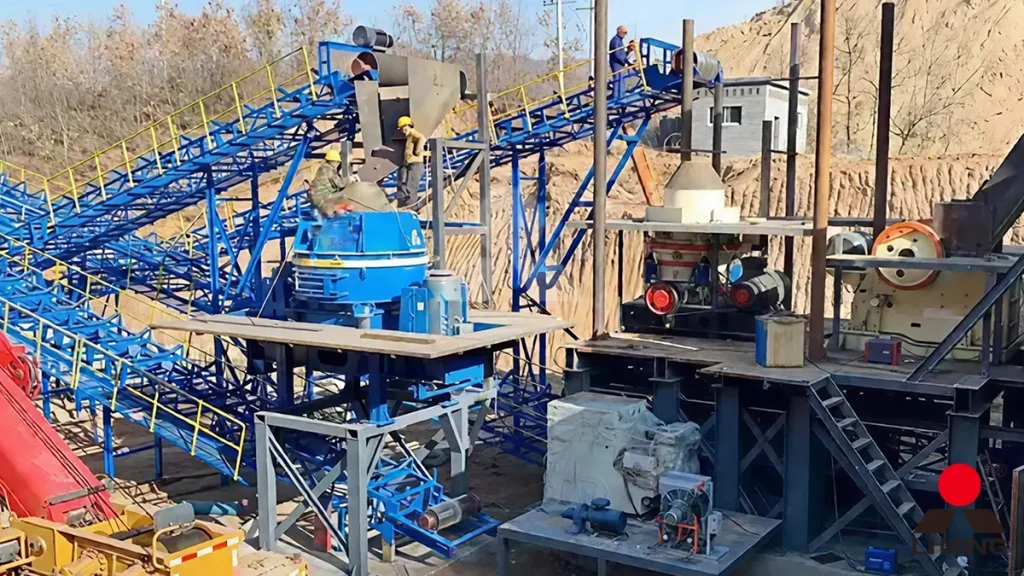
Recently, a complete 100 to 200 Tons Per Hour (TPH) granite crushing production line dispatched by Liming Heavy Industry successfully arrived at a client’s site in Ethiopia and entered the installation and commissioning phase. As the process engineer responsible for this project, I want to take this opportunity to discuss the engineering logic behind configuring this specific stone crushing machinery from a frontline technical perspective. Frankly speaking, when crushing hard rock, selecting the wrong equipment means the long-term cost of consumable wear parts will financially devastate the client. Today’s project notes skip the marketing fluff and focus entirely on practical engineering experience.
I. Project Background: How to Handle Granite
The local infrastructure projects and commercial concrete batching plants in Ethiopia exhibit a massive demand for aggregate, but the primary local stone resource is granite. Anyone with mining experience knows that granite possesses an incredibly high hardness and a massive silica content, making it a classic “highly abrasive” material. Many novice plant owners initially attempt to save money by purchasing horizontal impact crushers or hammer crushers for this material. The result? The chrome blow bars and hammers are destroyed within days, and the cost of replacing one set of wear parts equals half the price of the machine itself.
Therefore, for this highly abrasive material, our core engineering principle is absolute: You must utilize equipment that operates on the “lamination crushing” principle—specifically, the classic combination of a Jaw Crusher and a Cone Crusher. This is an unbreakable metallurgical rule written in the expensive lessons learned by countless clients.
II. Requirement Breakdown: Balancing Output Specifications and Capacity
During the preliminary engineering discussions, the client outlined their demands: a production capacity of 100 to 200 tons per hour, processing raw granite, with an output requirement specifying “5mm, 10mm, and 20mm.”
I must slightly correct the client’s colloquial phrasing here. In civil engineering terms, this actually refers to producing three distinct standard construction aggregates: 0-5mm (manufactured sand), 5-10mm (fine gravel), and 10-20mm (medium gravel). Regarding the raw feed, the client did not specify, but based on local blasting practices at the quarry, we assumed a maximum feed size of approximately 600mm to 750mm.
To stably output these three specifications at a capacity of 100-200 TPH while strictly controlling the flat and elongated (flakiness) index requires an exceptionally high degree of mechanical synchronization between the crushing and screening equipment.
III. Core Equipment Selection: Why This Specific Configuration?
Integrating the Liming Heavy Industry product database with the actual site conditions, I finalized the following core mining crusher and screening equipment combination for the client:
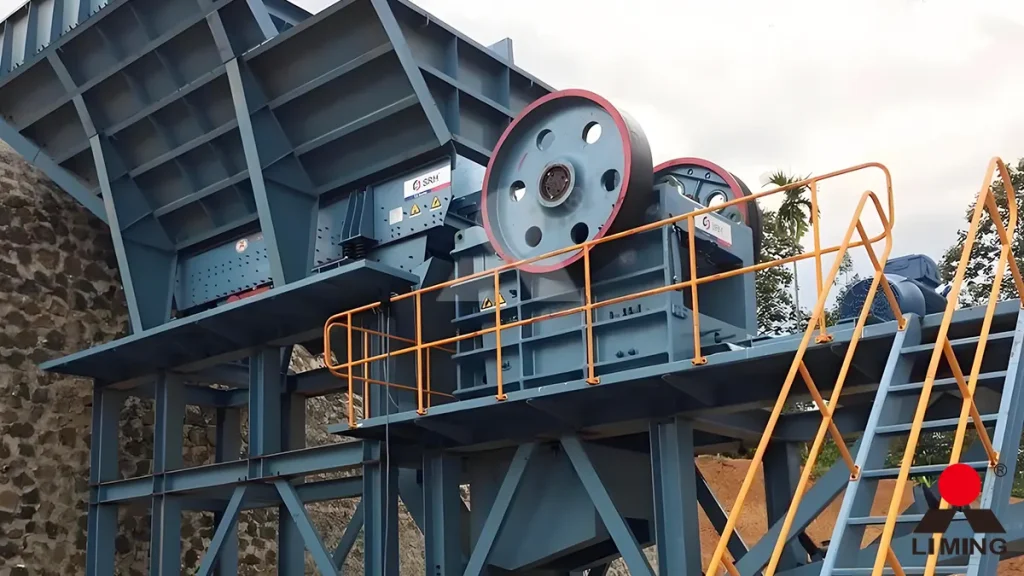
1. Primary Crushing Stage: ZSW490×110 Vibrating Feeder + PEW860 European Jaw Crusher
We selected the ZSW series for the feeder, heavily utilizing its grizzly bar screening function to pre-screen mud and fine dirt before it enters the jaw, immediately lightening the mechanical load on the subsequent crushers. For primary reduction, we deployed the PEW860 European Jaw Crusher. Why choose the European version? Because its V-shaped crushing cavity is engineered much deeper, delivering a significantly larger crushing ratio. Granite boulders are massive, and the PEW860 swallows them continuously and stably. Furthermore, the jaw plates are cast from high-manganese steel, guaranteeing a vastly longer operational lifespan during the primary stage than standard jaw crushers.
2. Secondary Medium and Fine Crushing Stage: HPT300 Multi-Cylinder Hydraulic Cone Crusher
This is the “soul” of the entire production line. When processing granite, the HPT multi-cylinder hydraulic cone crusher is the absolute premier choice. It operates on the lamination crushing principle; the mutual squeezing between the mantle and the bowl liner forces the granite to “grind” itself apart, rather than being “shattered” by kinetic impact. This not only keeps wear part consumption incredibly low but also produces a phenomenal finished particle shape with an extremely low flakiness index. The HPT300 operates effortlessly within this capacity tier, and its automated hydraulic cavity-clearing and tramp iron protection functions drastically reduce on-site maintenance downtime.
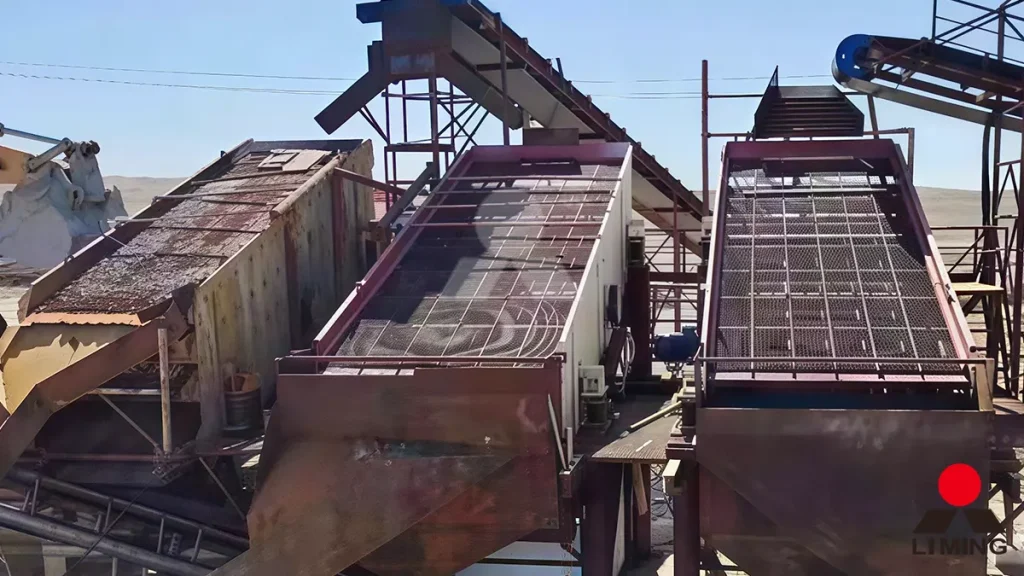
3. Screening Stage: 3YZS2160 Circular Vibrating Screen
To precisely separate the 0-5mm, 5-10mm, and 10-20mm fractions, we equipped the line with a 3YZS2160 Triple-Deck Circular Vibrating Screen. We mandated polyurethane screen meshes because they are highly wear-resistant and resistant to blinding (hole blockages). Here is a critical engineering detail: to guarantee the yield rate and particle shape of the 0-5mm manufactured sand, we engineered a rigorous closed-circuit loop between the cone crusher and the vibrating screen, ensuring that all material larger than 20mm is smoothly routed back to the cone crusher for re-crushing.
IV. Engineer’s Advice for Avoiding On-Site Pitfalls
Shipping the equipment is only the first step. As the lead engineer, I specifically urged the on-site installation and operational personnel to strictly adhere to the following protocols:
- The Cone Crusher Must Be Choke-Fed: The HPT cone crusher must absolutely maintain a full crushing cavity at all times. This not only maximizes the efficiency of lamination crushing but also ensures that the manganese wear parts wear evenly. Never allow the material feed to become erratic or intermittent.
- Prioritize Belt Conveyor Magnetic Separation: Granite mines occasionally mix in stray drill bits or steel rebar. While the cone crusher possesses hydraulic tramp iron protection, frequent metallic impacts will eventually damage the machine. We strongly advised installing a heavy-duty overband magnetic separator on the feed conveyor—spending a little money here saves a massive amount of money later.
- Dust Collection and Water Treatment: Ethiopia is implementing increasingly strict environmental regulations. We configured this line with a dry pulse-jet baghouse dust collector. If the client pivots to a wet sand washing process, we strongly recommend integrating a fine sand recovery unit and a settling pond to ensure the complete recycling of process water.
V. Conclusion
Manufacturing stone crushers and mining equipment requires more than just welding thick steel; it demands a profound metallurgical understanding of material properties and mastery over process flow combinations. This 100 to 200 TPH granite crushing production line shipped to Ethiopia contains no flashy, unnecessary configurations—it is a battle-tested, practical engineering solution ruthlessly focused on the principles of “High Efficiency, Low Consumption, and Absolute Stability.”
If you also have crushing requirements for hard rock—such as granite, basalt, or river pebbles—or if you have concerns regarding equipment selection and wear part operating expenses, we welcome you to contact the technical engineering team at Liming Heavy Industry at any time. We do not just sell equipment; we help you accurately calculate your total economic return on investment.