

Granite is a notoriously hard, highly abrasive igneous rock that presents severe metallurgical challenges during manufactured sand production. This engineering guide details the optimal granite sand making equipment selection and process configuration. Written by a senior process engineer, the article explains the necessity of the “three-stage crushing” circuit: deploying Liming Heavy Industry’s PEW Jaw Crusher for primary reduction, the HPT Cone Crusher for secondary lamination crushing to minimize wear part costs, and finally, the VSI6X Sand Maker for perfect “rock-on-rock” cubic shaping.
Granite is characterized by extreme hardness and exceptionally high abrasiveness. Consequently, the selection of the sand-making equipment directly dictates both the quality of the finished manufactured sand and the long-term operating costs of the plant. As a professional manufacturer and engineering provider of aggregate machinery, Liming Heavy Industry approaches equipment selection purely from the perspective of material metallurgy. In this guide, we will break down the core engineering principles for configuring a hard rock manufactured sand plant.
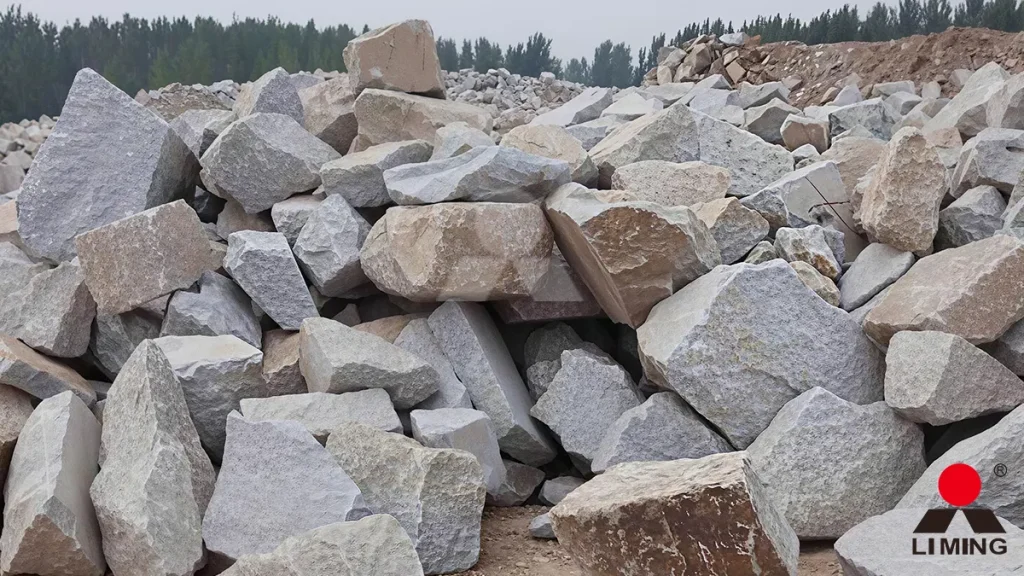
I. Granite Material Characteristics and Crushing Challenges
Granite is an acidic igneous rock with a massive silicon dioxide (SiO2) content. Its compressive strength generally ranges between 100 and 250 megapascals, making it a classic, difficult-to-crush hard rock. This extreme hardness and high abrasiveness introduce two primary engineering challenges to the sand-making process:
First, the energy consumption for comminution is massive. The host machinery must possess sufficient kinetic impact energy and compressive force to effectively shatter large boulders down to the fine particle size required for manufactured sand.
Second, controlling the finished particle shape is incredibly difficult. Under intense crushing forces, hard rock is prone to developing internal micro-cracks. If improper equipment is used, this leads to an unacceptably high proportion of flat, elongated (needle-like) particles. These flaky particles severely degrade the workability and ultimate compressive strength of the poured concrete.
Therefore, when selecting granite sand-making equipment, plant owners must never evaluate machinery based solely on the “tons per hour” capacity metric. Instead, the focus must be placed squarely on the adaptability of the crushing mechanism—specifically, the ability of lamination crushing to improve particle shape—and the metallurgical quality of the consumable wear parts. If you compromise on these factors, your long-term electrical power consumption and wear part replacement costs will skyrocket.
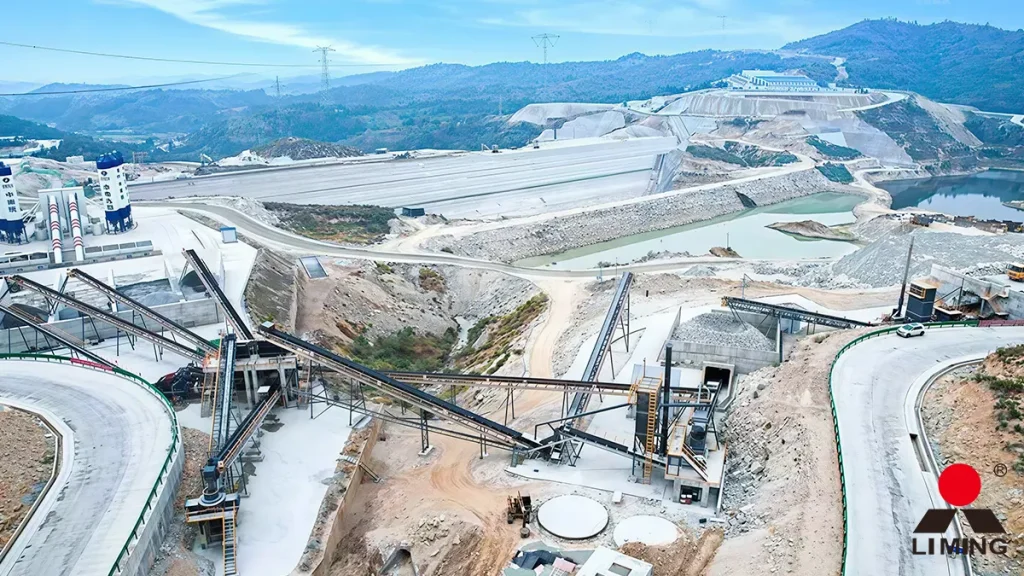
II. Hard Rock Sand Making: Equipment Selection and Process Logic
To successfully process high-hardness, highly abrasive materials like granite, the global aggregate industry universally adopts a three-stage crushing process: “Primary Jaw Crusher + Secondary Cone Crusher + Tertiary Vertical Shaft Impactor (Sand Maker).” This engineered combination perfectly balances crushing efficiency, optimal finished particle shape, and manageable operating expenses.
- Primary Coarse Crushing Stage: The heavy-duty PEW Series European Jaw Crusher is deployed to fracture massive raw boulders down to an intermediate size below 200 millimeters, providing a stable, manageable feed for the downstream equipment.
- Secondary Medium and Fine Crushing Stage: The HST Single-Cylinder Cone Crusher or HPT Multi-Cylinder Cone Crusher takes over. Utilizing the lamination (compressive) crushing principle, these machines further reduce the material to between 10 and 30 millimeters while proactively suppressing the generation of flaky particles. This stage absorbs the brunt of the granite’s abrasiveness, vastly extending the lifespan of the wear parts compared to impact crushers.
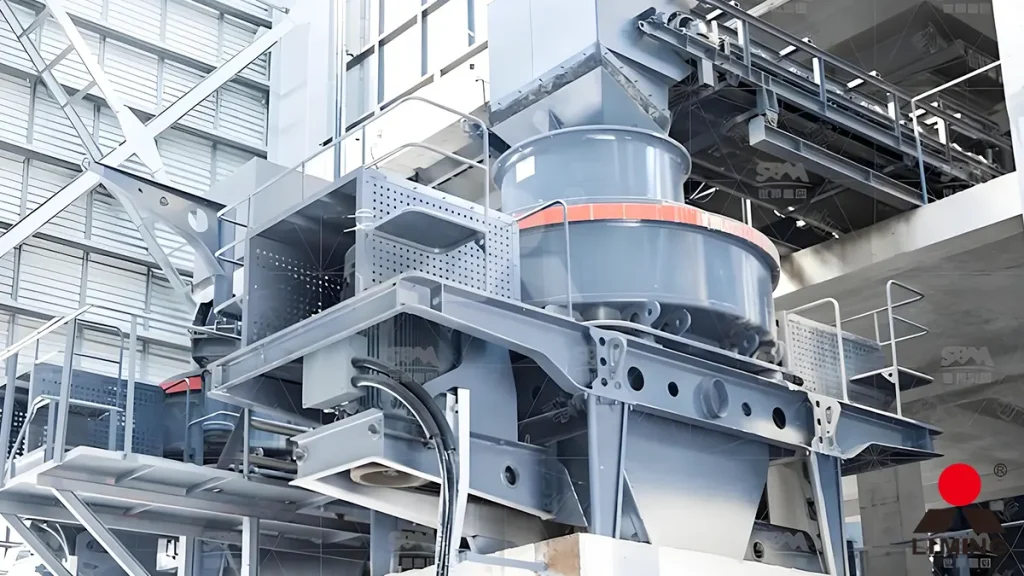
- Tertiary Sand Making and Shaping Stage: The VSI6X Series Sand Maker serves as the final processor. It utilizes high-velocity kinetic energy in a “rock-on-rock” mode to shape and finely crush the gravel. Under hard rock conditions, the rock-on-rock configuration allows the impeller and perimeter guard plates to wear evenly, significantly extending the replacement cycle of the consumable parts. The resulting manufactured sand features a perfectly round, cubic shape and a continuous gradation, making it highly prized for high-grade commercial concrete.
This specific process combination capitalizes on the cone crusher’s extreme wear resistance against hard rock and the vertical shaft impactor’s unparalleled expertise in particle shaping. It remains the absolute mainstream configuration for profitable granite sand-making operations worldwide.
III. Aligning Selection with Site Conditions and Production Goals
Once the core equipment types are established, the specific machine models must be finely tuned to match the actual working conditions of the project. Plant engineers must evaluate three critical operational parameters:
1. Target Capacity and Operating Hours
The design capacity of the plant should always include a 10% to 20% safety margin. This prevents the equipment from running at maximum overload continuously. Engineers must calculate the actual load rate of each individual machine based on the projected annual working days and daily operational shifts.
2. Raw Material Characteristics and Feed Conditions
The maximum block size of the raw blasted rock directly dictates the physical dimensions and feed opening specifications of the primary jaw crusher. Additionally, engineers must assess the initial fine material content (the pre-existing 0-5 millimeter fraction). If the raw ore naturally contains a high proportion of fine dirt and sand, a heavy-duty vibrating grizzly feeder must be installed to bypass these fines, reducing unnecessary energy consumption and preventing severe wear inside the primary crushing cavity.
3. Finished Sand Gradation Requirements
If the project demands a massive yield of 0-5 millimeter manufactured sand with a highly specific, controllable fineness modulus, the focus must shift to the operational mechanics of the VSI sand maker. Engineers must evaluate the machine’s capacity to adjust the rotor speed, swap cavity profiles, and optimize the downstream vibrating screen meshes, rather than simply pursuing raw volumetric throughput.
Conclusion and Turnkey Engineering Solutions
Properly configuring a granite sand-making plant requires absolute precision in metallurgical engineering. Liming Heavy Industry provides comprehensive services, including on-site topographical surveying, raw material laboratory analysis, and complete process flow design. By integrating your specific capacity targets, site layout constraints, and final product requirements, we deliver a highly rational, investment-optimized hard rock sand-making configuration. We ensure your plant possesses the exact mechanical capability required, preventing the financial disaster of under-sized machinery and the wasteful capital expenditure of over-sized equipment. Contact our engineering team today to design your customized manufactured sand production line.