

Summary:Selecting between cone crushers and vertical shaft impact crushers is a fundamental engineering decision in aggregate production. This comprehensive guide compares the compressive lamination mechanics of cone crushers with the high-velocity kinetic impact of VSI sand makers. Featuring Liming Heavy Industry models like the HPT Cone Crusher and VSI6X Sand Maker, the article explains how to match rock hardness, particle shape, and throughput capacity to lower operating expenses and optimize aggregate quality.
In modern mineral processing and aggregate production plants, secondary and tertiary comminution equipment dictates the final commercial value of the product. Among the wide variety of crushing machinery available today, two machine types stand out as the core workhorses for medium and fine reduction: the Cone Crusher and the Vertical Shaft Impactor (VSI). Both machines offer high processing capacities and superior crushing ratios, but their mechanical structures, crushing principles, and finished product shapes differ fundamentally.
Many quarry owners, contractors, and process engineers face the critical dilemma of choosing between a cone crusher and a vertical shaft impactor. Selecting the wrong machine leads to excessive wear part consumption, high power draw, and out-of-spec particle shapes. This comprehensive engineering guide breaks down the detailed comparisons, working principles, advantages, and application scenarios of cone crushers and vertical shaft impact crushers, alongside an overview of other primary crushing machinery.
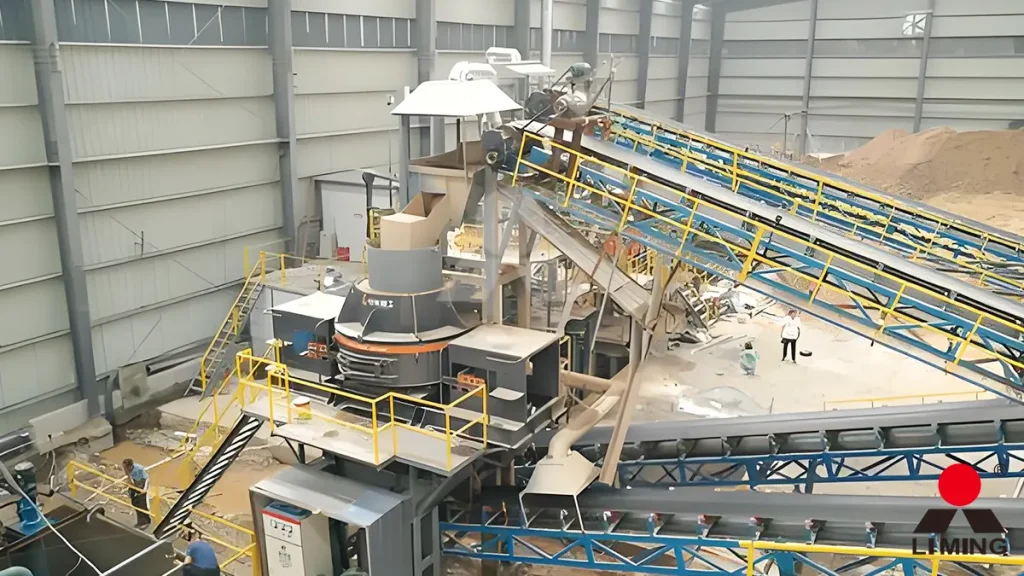
Cone Crusher vs. Vertical Shaft Impact Crusher: The Core Comparison
To determine which machine fits your production line, engineers analyze four foundational mechanical and metallurgical differences.
1. Mechanical Structure and Core Components
The structural designs of these two machines are completely distinct:
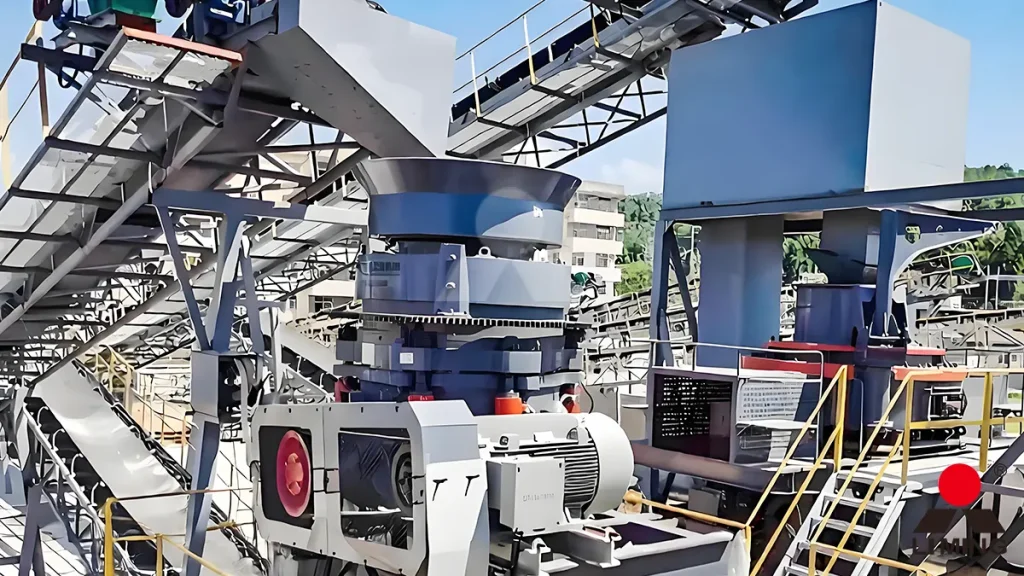
- Cone Crusher: Features a heavy-duty vertical main shaft, an eccentric sleeve, a rotating mantle (moving cone), and a stationary bowl liner (concave). The crushing components are cast from high-manganese alloy steel to resist extreme compressive forces.
- Vertical Shaft Impactor (VSI): Features a high-speed vertical rotor assembly, deep-cavity impeller, tungsten carbide rotor tips, and perimeter impact guard plates. Material enters vertically from the top and is accelerated outward by centrifugal force.
2. Crushing Principles: Lamination vs. Kinetic Impact
The method of rock fracture defines the machine’s energy efficiency:
- Cone Crusher (Lamination Crushing): As the eccentric shaft rotates, the mantle swings periodically toward and away from the bowl liner. Rocks caught inside the chamber are subjected to continuous squeezing, bending, and splitting. Crucially, the rocks are forced to crush against one another (rock-on-rock lamination), maximizing power efficiency and reducing direct steel contact.
- Vertical Shaft Impactor (Kinetic Impact): Material is fed into the high-speed rotor and accelerated to velocities exceeding 70 to 80 meters per second. The rocks are thrown into the crushing chamber where they collide violently in mid-air with other stones (rock-on-rock) or strike heavy alloy anvils (rock-on-anvil). The rock shatters along its natural mineral cleavage lines upon impact.
3. Feed Hardness and Abrasion Suitability
Rock hardness dictates the operational lifespan of internal consumables:
- Cone Crusher: Engineered specifically for high-hardness, highly abrasive rocks with compressive strengths exceeding 200 to 300 megapascals, such as granite, basalt, quartzite, and iron ore. The slow, heavy compressive force ensures that manganese liners last for thousands of operating hours.
- Vertical Shaft Impactor: Can process both soft and hard materials, but its feed size is strictly limited (typically under 50 millimeters). When processing hard, abrasive stone, it must be operated strictly in the “rock-on-rock” mode to prevent rapid destruction of internal steel components.
4. Finished Product Shape and Particle Size
The downstream application determines the necessary machine selection:
- Cone Crusher: Primarily produces medium-fine gravel (3mm to 60mm). While modern lamination cavities produce good aggregate, the output still contains a minor percentage of flat and elongated (needle-like) particles that may require secondary shaping for high-speed railway concrete specifications.
- Vertical Shaft Impactor: Produces exceptionally cubic aggregate with superior roundness and zero internal micro-cracks. It is the premier machine for manufacturing 0-5mm concrete sand and shaping coarse gravel to eliminate flakiness.
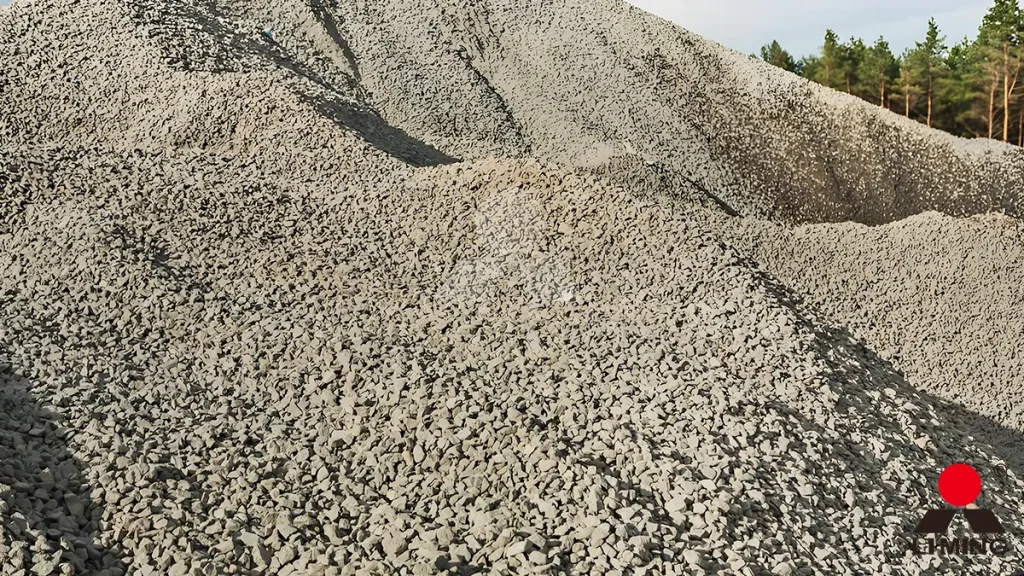
Overview of Core Industrial Crusher Types
A complete aggregate or mineral plant integrates multiple stages of comminution machinery. Below is an engineering overview of the primary crusher types utilized across the industry.
1. Jaw Crusher (Primary Coarse Reduction)
The jaw crusher is the universal primary machine for processing raw, blasted boulders up to 1200 millimeters. Utilizing a moving jaw and a fixed jaw, it crushes rock through periodic compression. Modern European designs, such as the C6X Series Jaw Crusher and PEW Series Jaw Crusher from Liming Heavy Industry, feature non-welded bolted frames, deep V-shaped cavities without dead zones, and hydraulic wedge adjustments. They handle rocks with compressive strengths up to 320 MPa with low power consumption.
2. Cone Crusher (Secondary and Tertiary Compression Reduction)
For secondary reduction of hard, abrasive rock, hydraulic cone crushers are mandatory. Advanced multi-cylinder units, such as the HPT Series Cone Crusher, and single-cylinder units, such as the HST Series Cone Crusher, utilize automated hydraulic tramp iron release systems. If uncrushable steel enters the chamber, the hydraulic cylinder automatically drops the main shaft to discharge the obstruction, completely protecting the internal components from mechanical failure.
3. Horizontal Shaft Impact Crusher (Secondary Soft Rock Reduction)
Horizontal impact crushers, such as the CI5X Series Impact Crusher, utilize heavy spinning blow bars to shatter rock against adjustable impact curtains. They offer massive reduction ratios and produce exceptional cubic particle shapes in fewer crushing passes. However, because the blow bars absorb direct impact, they are economically restricted to soft and medium-hard materials with low silica content, such as limestone, dolomite, and gypsum.
4. Vertical Shaft Impactor (Fine Sand Making and Shaping)
The VSI sand maker, such as the VSI6X Series Sand Maker and VSI5X Series Sand Maker, represents the pinnacle of artificial sand technology. Featuring four-opening deep-cavity rotors, thin-oil lubrication, and modular throw heads, the VSI6X increases material throughput by 30% while lowering consumable replacement costs by allowing operators to flip and reuse perimeter guard plates.
5. Heavy Hammer Crusher and Roller Crusher
Heavy hammer crushers achieve single-stage reduction for soft limestone, eliminating the need for a secondary crusher. Roller crushers utilize dual counter-rotating cylinders to crush coal, limestone, and cement clinker through mechanical pinching, offering compact footprints for low-capacity fine grinding.
Engineering Decision Matrix: How to Choose the Right Crusher
To assist plant managers in matching machinery to their specific geological conditions, the table below outlines the recommended equipment configurations based on material properties and production targets.
| Material Type & Hardness | Target Product Specification | Recommended Machine Type | Recommended Liming Model | Key Engineering Advantage |
|---|---|---|---|---|
| Granite, Basalt, Quartzite (>200 MPa) | 10-30mm Commercial Gravel | Hydraulic Cone Crusher | HPT300 / HST250 Cone Crusher | Lamination crushing minimizes manganese liner wear on high-silica stone. |
| Hard Rock Pre-crushed Gravel (<50mm) | 0-5mm Concrete Sand & Shaping | Vertical Shaft Impactor (VSI) | VSI6X1040 / VSI6X1150 Sand Maker | Rock-on-rock high-velocity impact delivers perfectly cubic manufactured sand. |
| Limestone, Dolomite (<150 MPa) | 0-31.5mm Road Base & Aggregate | Horizontal Shaft Impact Crusher | CI5X1213 / CI5X1315 Impact Crusher | High reduction ratio and cubic output in fewer processing stages with lower capital cost. |
| All Run-of-Mine Boulders (<1000mm) | 100-300mm Secondary Feed | Heavy-Duty Primary Jaw Crusher | C6X110 / PEW860 Jaw Crusher | Deep cavity compressive reduction with zero dead zones and high shock resistance. |
Turnkey Comminution Solutions from Liming Heavy Industry
Choosing between a cone crusher and a vertical shaft impactor is not an either-or decision; in modern high-capacity aggregate plants, they frequently operate in tandem. The cone crusher efficiently reduces hard rock down to intermediate gravel, while the VSI sand maker reshapes the gravel and produces premium manufactured concrete sand.
Liming Heavy Industry is an established global leader in crushing, screening, and sand making machinery. From comprehensive laboratory rock testing to custom flowsheet design, heavy machinery manufacturing, automated PLC control integration, and on-site EPC commissioning, our engineering team ensures your processing plant operates with maximum throughput, superior product quality, and minimum daily operating expenses. Contact our technical team today to analyze your rock samples and receive a tailor-made equipment configuration plan.