

Purifying potash feldspar is critical for the glass and ceramics industries. This engineering guide details the four core potash feldspar beneficiation processes: Magnetic Separation, Froth Flotation, Acid Leaching, and Combined Purification Circuits. Written by a senior process engineer, the article explains how to successfully extract magnetic iron oxides, mica, and ultrafine iron staining from the raw ore. Integrating robust preparation equipment from Liming Heavy Industry, operators can optimize their reagent regimes and magnetic intensities to drastically improve the whiteness of the final feldspar concentrate.
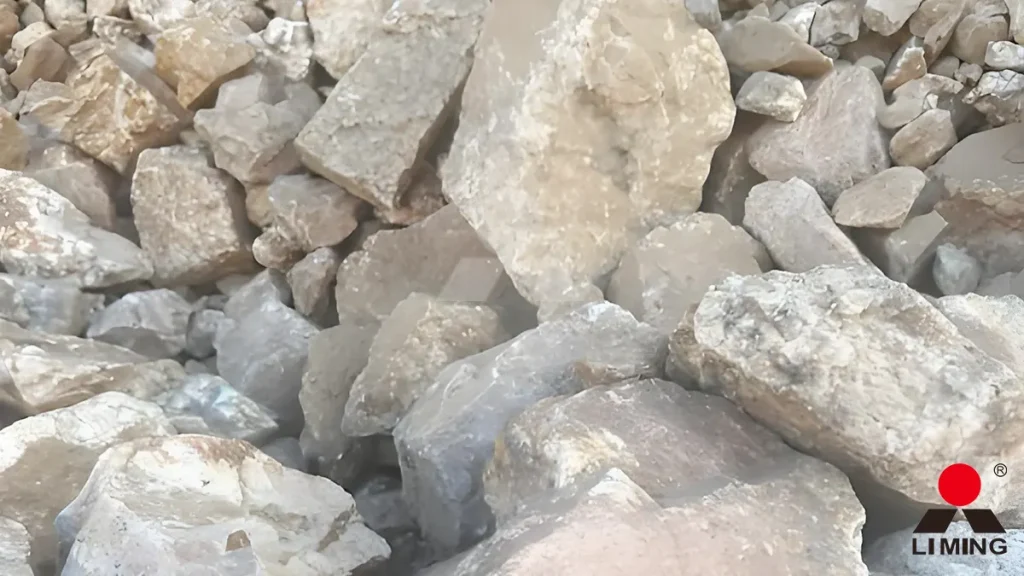
Potash feldspar is an indispensable raw material in the glass, ceramics, and chemical manufacturing industries. However, the commercial value of potash feldspar is entirely dictated by its purity—specifically, its whiteness. Natural feldspar deposits are notoriously contaminated with iron-bearing oxides, mica, and various colored silicate minerals. Even trace amounts of iron will severely discolor the final ceramic glaze or glass product, rendering it commercially useless.
As a senior metallurgical engineer, I approach feldspar purification as a multi-stage physical and chemical battle. Removing these stubborn impurities requires highly targeted beneficiation flowsheets. Depending on the exact mineralogy of the deposit and the microscopic dissemination of the iron, the purification process is divided into four main technological routes: Magnetic Separation, Froth Flotation, Acid Leaching, and Combined Processing Circuits.
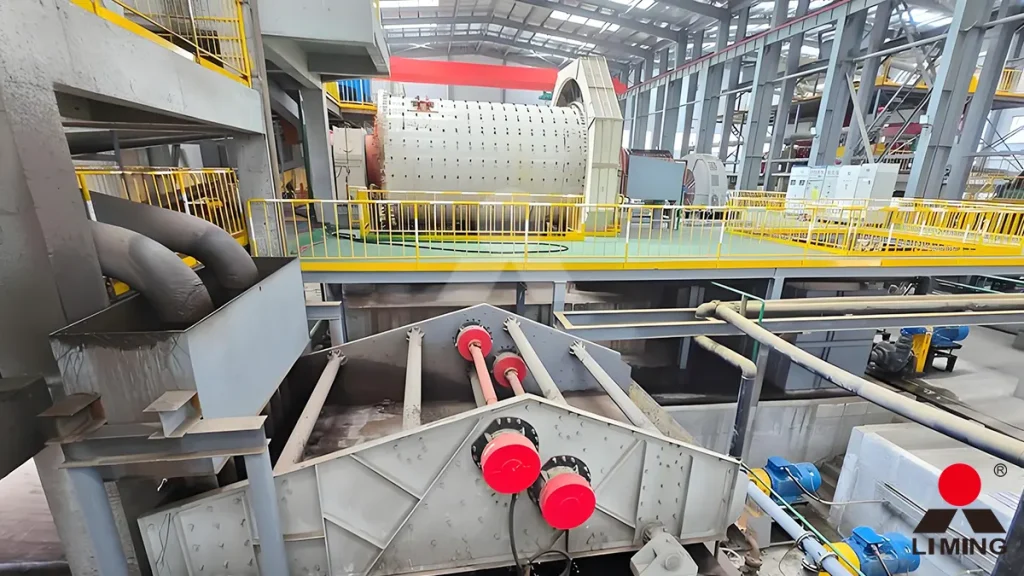
Before any separation can occur, the raw ore must be flawlessly prepared. By utilizing heavy-duty comminution equipment from Liming Heavy Industry—such as the C6X Series Jaw Crusher for primary reduction, the HPT Multi-Cylinder Cone Crusher for secondary crushing, and the S5X Vibrating Screen for precise classification—engineers guarantee that the rock is perfectly liberated before it enters the sensitive purification circuit. Below, we break down the four core impurity removal technologies.
1. Magnetic Separation for Iron Removal
For separating weakly magnetic impurities such as iron oxides, mica, and garnet from the non-magnetic potash feldspar, High-Intensity Magnetic Separation (HIMS) is the undisputed industry standard. The exact equipment selection must be dictated by the ore’s specific properties. The most commonly deployed machines include wet drum magnetic separators, vertical-ring pulsating high-gradient magnetic separators, and flat-plate magnetic separators.
In actual production environments, the success of the iron removal is directly tied to the magnetic field intensity and the number of magnetic separation stages. Generally, the stronger the magnetic field and the higher the number of passes through the magnetic circuit, the lower the final iron content will be. Applying a pulsating current to the slurry can also significantly enhance the extraction of fine iron particles. It is critical to conduct thorough laboratory testing to optimize the magnetic parameters, ensuring maximum purification without incurring excessive power consumption.
2. Froth Flotation for Non-Magnetic Impurities
When the iron impurities in the potash feldspar exist as non-magnetic pyrite, mica, or complex iron-bearing alkali metal silicates (like tourmaline and hornblende), magnetic separation will fail. In these cases, froth flotation is mandatory. The flotation environment must be strictly chemically controlled based on the target impurity:
- For Sulfide Minerals: Floatation is executed at the slurry’s natural pH level using xanthate-based collectors.
- For Mica Minerals: Separation is successfully achieved in a highly acidic environment (pH 2.5 to 3.5) utilizing amine-based cationic collectors.
- For Silicate Minerals: At a pH of 3 to 4, sulfonate-based collectors are applied to float out the unwanted silicates.
Engineer’s Analysis: Extensive operational data proves that weakly acidic flotation requires significantly lower reagent dosages than weakly alkaline flotation, resulting in higher feldspar yields and superior overall efficiency. However, strict attention must be paid during the upstream grinding stage. Over-grinding generates ultra-fine particles that lack the kinetic energy to break the hydration layer surrounding the flotation bubbles, causing the target minerals to become “un-floatable.” Precise classification using hydrocyclones is required to prevent this.
3. Acid Leaching for Micro-Disseminated Impurities
Acid leaching utilizes specific acids to selectively dissolve iron-bearing minerals without destroying the potash feldspar. This hydrometallurgical method is absolutely necessary when the iron impurities exist in an ultra-fine, micro-crystalline structure deeply embedded within the feldspar matrix, making physical liberation by grinding impossible.
Commonly used acids include hydrofluoric, hydrochloric, sulfuric, nitric, and oxalic acid. However, utilizing inorganic acids comes with severe drawbacks:
- They are highly corrosive, requiring extremely expensive, specialized acid-resistant processing equipment.
- The highly toxic waste liquids must be heavily treated before discharge, resulting in massive environmental compliance costs.
- Residual impurity ions from the reaction can interfere with the thermal performance of the final ceramic products during kiln firing.
Therefore, organic acids, particularly oxalic acid, offer a far superior engineering future. Oxalic acid is highly acidic and possesses stronger reducing and complexing capabilities than many inorganic acids. It dissolves iron oxides exceptionally well—achieving iron removal rates of up to 90% for iron hydroxides like goethite and lepidocrocite, though it reacts slower with hematite. Most importantly, any residual organic acid simply burns off during the high-temperature calcination stage of ceramic production, introducing zero unwanted impurity ions into the final product.
4. Combined Purification Flowsheets for Complex Ores
For highly refractory (difficult-to-process) potash feldspar ores, a single beneficiation method is rarely sufficient. These ores not only possess high overall iron content but often feature “iron staining”—where iron compounds penetrate deep into the microscopic cleavage planes of the feldspar crystal. When single processes fail to produce commercial-grade concentrate, engineers must design combined purification flowsheets.
Standard combinations include “Acid Leaching + Flotation,” “Flotation + Magnetic Separation,” “Mechanical Scrubbing + Magnetic Separation + Flotation,” and “Desliming + HIMS + Acid Leaching.”
Example: The Acid Leaching and Flotation Combination:
In this advanced circuit, the ore is first leached with sulfuric acid to dissolve the vast majority of the exposed iron minerals. The resulting acid-leached product is neutralized and fed into a flotation circuit as the raw material. Using sodium oleate as an anionic collector, the flotation cells selectively separate the remaining stubborn iron-stained compounds. This one-two punch significantly elevates the whiteness of the potash feldspar, yielding exceptional purification results.
Selecting the Optimal Flowsheet
Among the four primary beneficiation routes, Magnetic Separation remains the most environmentally friendly and operationally straightforward, serving as the backbone for standard feldspar purification. If the ore contains non-magnetic impurities, Flotation is the mandatory choice, provided the reagent regimes and pH parameters are strictly optimized. However, for ultra-fine or deeply iron-stained refractory ores, Acid Leaching or a highly engineered Combined Process Flow is the only way to meet commercial whiteness standards.
To ensure your processing facility achieves maximum recovery while maintaining low daily operating expenses, you must build upon a foundation of reliable mechanical liberation. Partner with Liming Heavy Industry to integrate advanced crushing, grinding, and classification machinery into your flowsheet, and let our engineering team design a custom purification circuit tailored precisely to your raw material.