

Spodumene is a critical hard-rock source of lithium, requiring rigorous physical and chemical beneficiation to produce high-grade concentrate. This engineering guide details the complete equipment classification and applicable processes for spodumene beneficiation. Written by a senior process engineer, the article covers the entire metallurgical flow: primary reduction using Liming Heavy Industry’s C6X Jaw Crusher, crucial pre-desliming circuits to remove clay, and core separation techniques involving froth flotation, heavy media separation, and high-intensity magnetic separation to efficiently extract lithium while rejecting iron and silica gangue.
In the rapidly expanding global lithium market, spodumene stands as the premier hard-rock source for lithium extraction. However, processing this abrasive pegmatite rock demands a highly sophisticated, multi-stage metallurgical flowsheet. Spodumene beneficiation involves multiple pre-treatment and separation stages. It begins with intensive crushing, screening, and conveyor transport to facilitate initial manual or automated optical sorting. The ore is then processed through heavy-duty ball mills, chemical conditioning tanks, and coarse flotation cells to execute mandatory pre-desliming and impurity removal.
The core separation circuit is engineered strictly according to the ore’s specific characteristics. Depending on the crystal dissemination, engineers deploy advanced froth flotation cells for direct or reverse flotation, heavy media cyclones for fine-grained gravity separation, and high-gradient magnetic separators to strip away iron contamination. For highly complex and refractory deposits, a combined flowsheet—integrating flotation, gravity, magnetic separation, and chemical leaching—is mandatory to elevate the final spodumene concentrate grade. As a senior metallurgical engineer, I will break down the specific equipment categories required for each of these critical processing stages.
I. Spodumene Pre-Sorting and Crushing Equipment
Before entering the wet processing circuit, coarse-grained spodumene (typically sized between 25 and 300 millimeters) is often subjected to initial hand-sorting or automated sensor-based sorting. This early pre-selection relies on the ore’s visual color, luster, and density to reject barren waste rock immediately after the primary crushing stage, significantly lowering downstream energy consumption.
To prepare the rock for this stage, a robust mechanical crushing circuit is required. Due to the extreme hardness of pegmatite, engineers rely on heavy-duty compressive machinery rather than impact crushers.
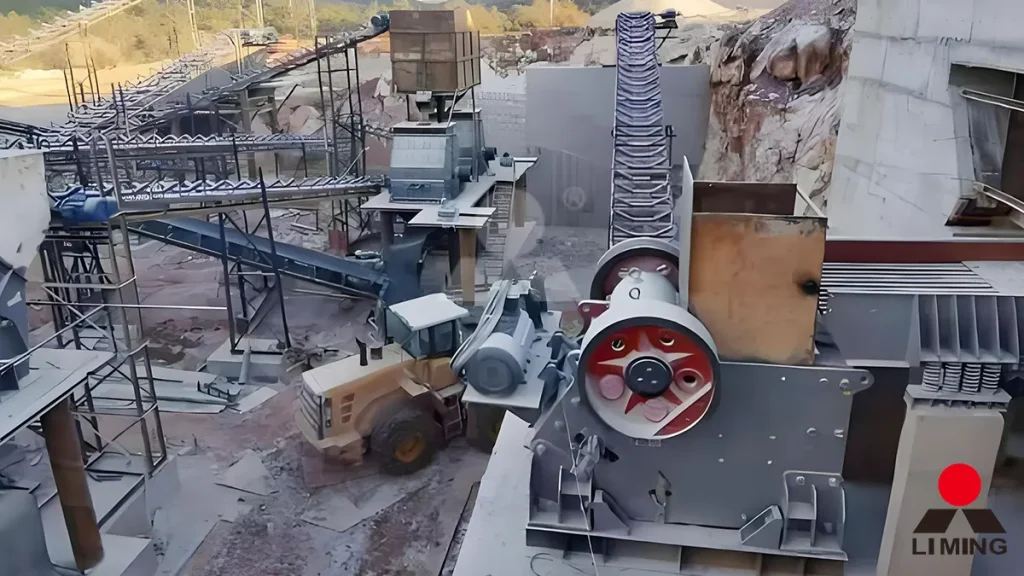
- Crushing Equipment: The C6X Series Jaw Crusher from Liming Heavy Industry is utilized for primary coarse reduction (accepting boulders up to 1200 millimeters). Secondary and tertiary fine crushing is executed by the HPT Multi-Cylinder Hydraulic Cone Crusher to minimize wear part consumption against the highly abrasive silica.
- Screening Equipment: The S5X Series Vibrating Screen provides high-capacity, precision classification to ensure strict particle size control before the sorting belt.
II. Spodumene Pre-Desliming Equipment
Pre-desliming is a critical, absolute prerequisite in spodumene beneficiation. If fine clay mud and mica are not removed before the main flotation circuit, they will coat the spodumene crystals and indiscriminately absorb all expensive chemical reagents, completely destroying the lithium recovery rate.
Following the crushing stage, the ore enters the milling circuit to achieve mineral liberation (typically ground until 75% of particles pass a 0.074-millimeter mesh). Subsequently, amine-based collectors (such as dodecylamine or cocoamine) are added to float off the clay slimes and mica waste.
- Wet Overflow Ball Mill: Deployed in the fine grinding stage to achieve precise particle size reduction.
- Reagent Conditioning Tanks: Heavy-duty mechanical agitators designed to vigorously mix the slurry with chemical reagents, ensuring complete surface contact before the rough flotation stage begins.
- Hydrocyclone Clusters: Utilized alongside the ball mill for high-intensity mechanical desliming and classification based on centrifugal force.
III. Spodumene Flotation Equipment
Froth flotation is the undisputed core technology for processing fine-grained spodumene. It is executed via two primary chemical routes: Direct Flotation and Reverse Flotation.
In Direct Flotation, the slurry is conditioned in a highly alkaline environment (pH heavily adjusted with sodium hydroxide). Oleic acid and its associated soap salts are added as collectors to directly float the valuable spodumene to the surface. In Reverse Flotation, the slurry is also made alkaline using lime, but dextrin and starch are added to chemically depress (protect) the spodumene. Amine collectors are then used to float away the worthless silicate gangue minerals.
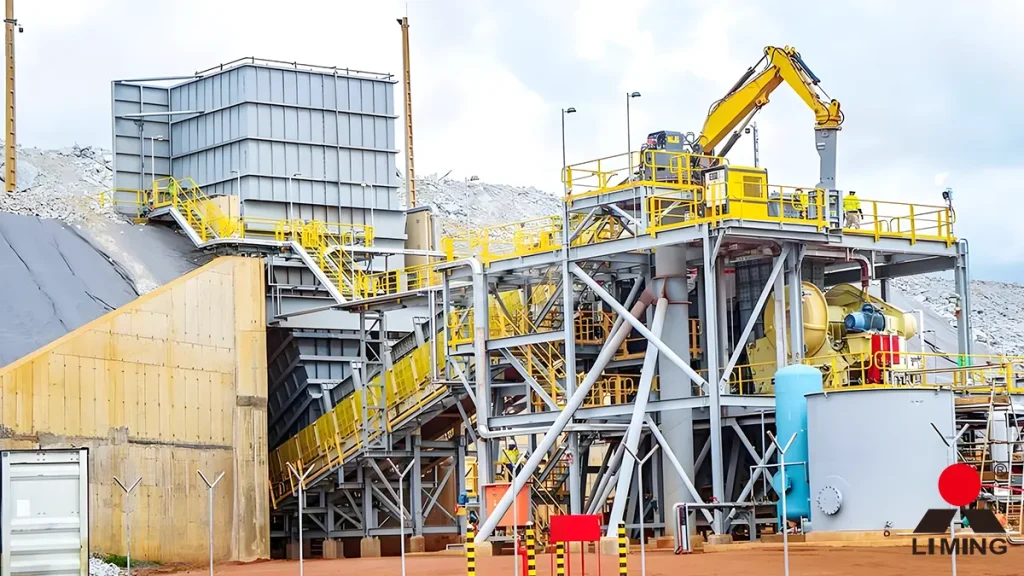
The success of either method depends on the mechanical aeration of the flotation cells. Engineers deploy massive XCF and KYF Series Mechanical Agitation Flotation Cells. These two machine types are frequently combined into a single operational unit. The KYF cell acts as the suction tank, while the XCF cell serves as the direct-flow tank, creating an incredibly efficient circuit for intense scavenging and cleaning operations without requiring auxiliary slurry pumps.
IV. Heavy Media Separation Equipment
For coarsely disseminated spodumene ores, grinding the entire volume to a fine powder is an unacceptable waste of electrical energy. Instead, engineers deploy Heavy Media Separation (HMS). By mixing the crushed ore with a dense liquid (typically a ferrosilicon suspension) and injecting it into a Heavy Media Cyclone under a pressure of 0.05 to 0.20 MPa, a rapid physical separation occurs based purely on density.
Because spodumene (specific gravity ~3.2) is heavier than the surrounding quartz and feldspar gangue (specific gravity ~2.6), the valuable spodumene sinks and exits through the bottom underflow of the cyclone, producing a high-grade concentrate at a fraction of the cost of flotation.
V. Spodumene Magnetic Separation Equipment
High purity is the ultimate requirement for commercial spodumene, especially for glass and ceramic applications. The raw ore frequently contains iron-bearing impurities (such as tourmaline and biotite) or microscopic steel debris generated during the crushing and milling stages. If left untreated, this iron contamination ruins the concentrate grade.
Because these associated iron impurities exhibit only weak magnetic properties, standard magnets are useless. The plant must utilize high-intensity magnetic fields (exceeding 10,000 Oersteds). Engineers deploy Wet High-Intensity Magnetic Separators (WHIMS) and High-Gradient Magnetic Separators (HGMS) to aggressively pull the iron out of the slurry, yielding a premium, low-iron spodumene concentrate.
VI. Combined Beneficiation Equipment Circuits
When dealing with highly complex, refractory lithium deposits, relying on a single beneficiation method will result in unacceptably low recovery rates. In these challenging scenarios, metallurgical engineers must design integrated, multi-stage flowsheets. Common hybrid circuits include “Flotation + Magnetic Separation,” “Flotation + Gravity Separation + Magnetic Separation,” and highly advanced “Flotation + Chemical Acid Leaching” combinations.
These complex flowsheets require the flawless synchronization of a vast array of equipment: advanced flotation machines, high-gradient magnetic separators, jigging machines, shaking tables, spiral chutes, and heated chemical leaching tanks. By partnering with a premier manufacturer like Liming Heavy Industry, plant operators guarantee that their heavy crushing infrastructure perfectly supports these sensitive downstream separation circuits, ensuring maximum lithium extraction and long-term operational profitability.