

Extracting pure copper from low-grade rock requires a seamless integration of heavy mechanical engineering and complex chemical refining. This guide details the complete copper ore processing flow, from extraction to final product. Written by a senior metallurgical engineer, the article explains the critical initial stages of mineral liberation using Liming Heavy Industry’s C6X Jaw Crushers and Ball Mills. It then explores the core froth flotation separation circuit, followed by the rigorous pyrometallurgical smelting and electrolytic refining processes necessary to produce high-purity commercial copper.
Transforming raw, low-grade copper ore into high-purity metallic copper is a monumental industrial undertaking. The entire metallurgical operation requires the seamless synchronization of physical beneficiation and high-temperature chemical refining. As a senior metallurgical engineer, I oversee these massive circuits. The complete copper ore processing flow is strictly divided into the following primary engineering stages:
1. Extraction and Logistics
The operational lifecycle begins at the mine. Raw copper ore is extracted from the earth via large-scale open-pit or deep underground mining operations. Once blasted, heavy haul trucks transport the massive boulders directly to the primary receiving hopper at the beneficiation plant.
2. Crushing (Comminution)
Upon arriving at the processing facility, the run-of-mine ore must undergo immediate mechanical reduction. The primary objective is to shatter the massive boulders into smaller, manageable gravel, which drastically reduces the workload on the downstream mills.
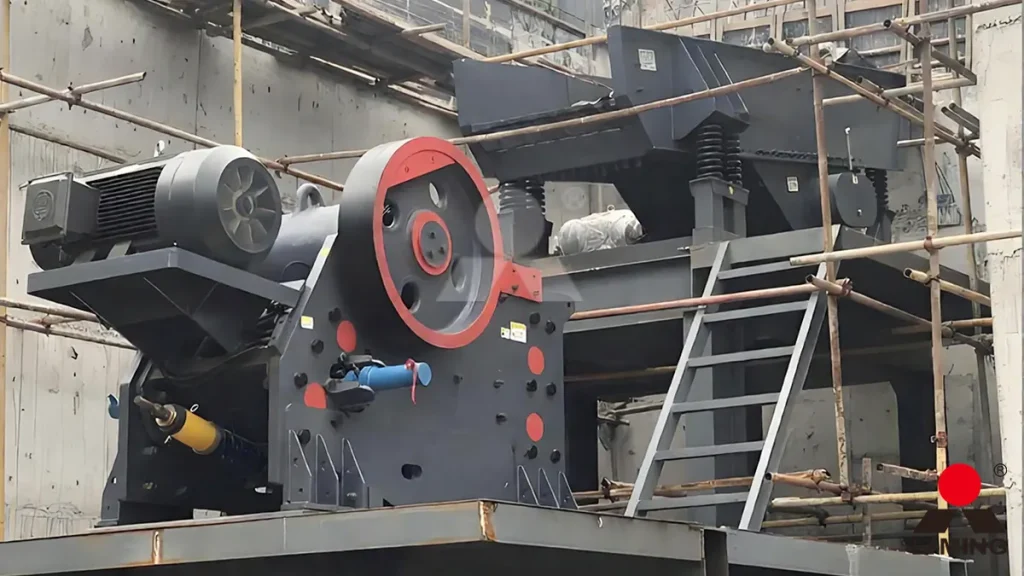
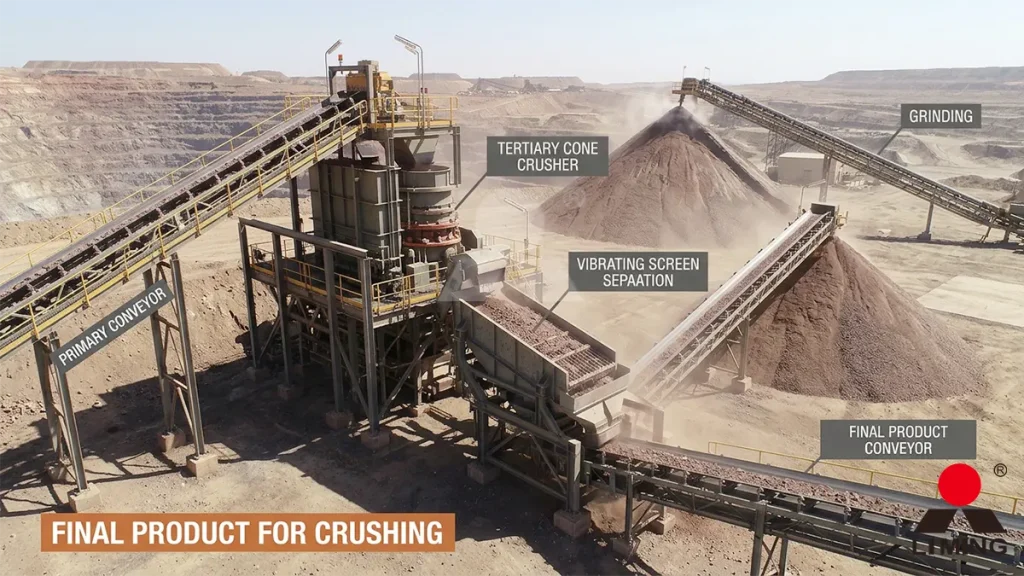
This stage is rigorously divided into primary coarse crushing, secondary medium crushing, and tertiary fine crushing. For primary reduction, the heavy-duty C6X Series Jaw Crusher from Liming Heavy Industry provides immense compressive strength. The secondary and tertiary stages rely on the HPT Multi-Cylinder Hydraulic Cone Crusher, which utilizes lamination crushing to efficiently process the abrasive rock down to a uniform intermediate size.
3. Grinding
The crushed ore gravel must be further pulverized to achieve absolute mineral liberation—the state where microscopic copper crystals are physically detached from the worthless silica gangue. This critical task is executed by feeding the material into massive Overflow Ball Mills or Rod Mills. Tumbling steel media inside the rotating cylinders crush and shear the rock into an ultra-fine slurry, achieving the exact particle size required for optimal chemical flotation.
4. Froth Flotation
Flotation is the undisputed core of the entire copper beneficiation process. It exploits the subtle differences in the physical and chemical surface properties between the valuable copper minerals and the worthless gangue rock.
The fine slurry is pumped into mechanical agitation tanks. A precise cocktail of chemical reagents is introduced: collectors (which make the copper water-repellent), frothers (which create stable air bubbles), and modifiers (which adjust the pH). As air is injected into the flotation cells, the hydrophobic copper particles attach to the rising bubbles, forming a rich, metallic froth at the surface that is mechanically skimmed off. This process yields the high-grade copper concentrate.
5. Thickening and Filtration (Dewatering)
The newly extracted copper concentrate froth is essentially a watery soup containing a massive volume of moisture. Before it can be shipped or smelted, it must be aggressively dewatered. The slurry is pumped into deep-cone thickeners to settle the solids, and then squeezed through high-pressure filter presses. This removes the excess water, resulting in a solid, dry copper concentrate filter cake.
6. Smelting
The dry copper concentrate is transported to the pyrometallurgical smelter to finally extract the actual metal. The smelting process involves several extreme-heat stages, including high-temperature sintering roasting, flash or blast furnace smelting, and converter blowing. These chemical reactions strip away the remaining sulfur and iron, ultimately producing “blister copper,” which is approximately 98% to 99% pure.
7. Refining
Because blister copper still contains various trace impurities (like oxygen, sulfur, and precious metals), its purity must be elevated to meet commercial electrical standards. The primary refining method is electrolytic refining, though fire refining is also used. Electrolytic refining dissolves the blister copper anodes in an acid bath and plates pure copper onto a cathode, resulting in copper that is 99.99% pure.
8. Casting and Forming
The ultra-pure refined copper is then melted and cast into standardized copper ingots. Alternatively, it undergoes various mechanical forming processes—such as heavy rolling, drawing, or extrusion—to manufacture the diverse array of copper products required by the global electronics and construction industries.
Engineer’s Final Note: Throughout this massive, continuous metallurgical operation, strict attention must be paid to environmental protection and comprehensive resource utilization. Integrating advanced wastewater recycling circuits and safe tailings disposal protocols guarantees the sustainability and environmental compliance of the entire copper processing operation.