

Vibrating screens are the critical gatekeepers of product quality in bulk material handling. Written by a process engineering consultant, this guide explores the industrial uses of vibrating screens across mining, aggregate production, coal preparation, and waste recycling. It details core screening principles—scalping, sizing, and dewatering—and explains how matching material properties to advanced screening machinery like the S5X and YKN series maximizes throughput and significantly lowers daily operating expenses.
In my career as a process engineering consultant, I spend considerably more time evaluating screen decks than I do looking at heavy crushers. While crushing equipment often gets the spotlight, screening is the true gatekeeper of product quality and system efficiency. If a vibrating screen fails to separate materials accurately, the entire downstream flowsheet collapses: crushers choke on fine dust, grinding mills consume massive amounts of wasted electrical power, and the final product is rejected by buyers for failing to meet specifications.
Vibrating screens are not just metal boxes that shake. They are highly engineered dynamic systems that must adapt to distinct physical and chemical material properties. Understanding the diverse industrial uses of vibrating screens is essential for plant managers and investors looking to optimize capital expenditure and ensure long-term operational profitability.
In this engineering guide, I will break down how different industrial sectors utilize vibrating screening technology to classify, clean, and process bulk materials, and how equipment selection directly impacts bottom-line revenue.
Core Screening Principles in Bulk Material Handling
Before diving into specific industries, we must define the three primary mechanical functions that vibrating screens perform in any processing plant. Every industrial application relies on one or a combination of these core principles.
1. Scalping (Pre-Screening)
Scalping is the rough, heavy-duty separation of materials before they enter a primary or secondary crusher. The goal is to remove natural dirt, clay, or undersized rocks that are already smaller than the crusher’s discharge setting. By bypassing this material, the plant prevents the crusher chamber from packing, saves massive amounts of electrical power, and reduces the wear and tear on expensive manganese crusher liners.
2. Sizing and Classification
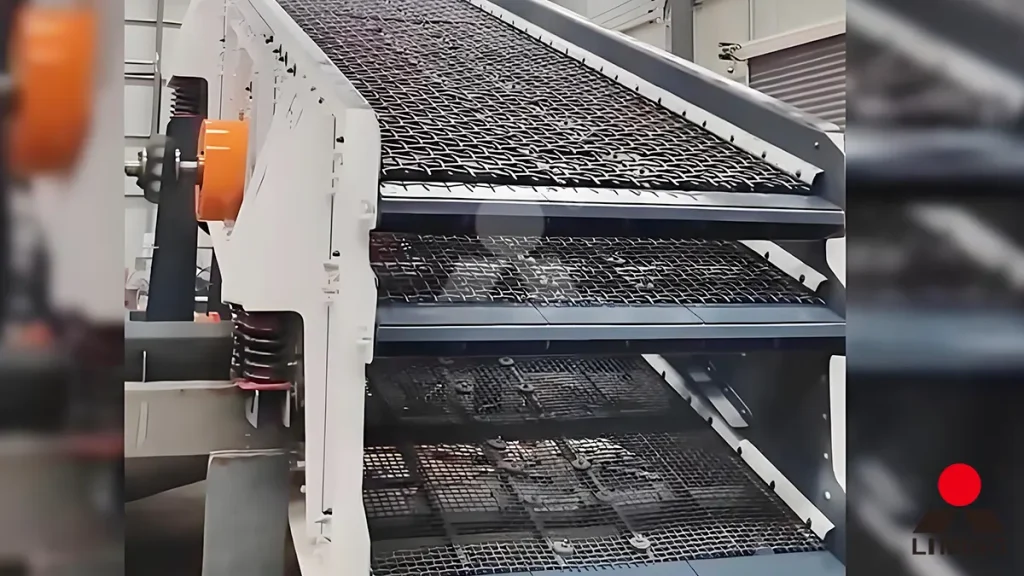
This is the most common use of vibrating screens. Sizing involves separating a mixed flow of crushed material into strict, commercial grade fractions (for example, isolating 5-10mm and 10-20mm stones). This requires high-frequency vibration and multi-deck screen configurations to ensure near-size particles do not blind the screen apertures.
3. Dewatering and Desliming
In wet processing environments, linear vibrating screens are used for solid-liquid separation. The screen vibrates at high G-forces on a slight upward incline, forcing water to drain through fine polyurethane slots while the solid material forms a dry, stackable filter cake on top of the deck.
Major Industrial Uses of Vibrating Screens by Sector
Because no two raw materials behave exactly the same under vibration, equipment manufacturers engineer specific screening solutions for different sectors. Here is how vibrating screens are deployed across the four largest heavy industries.
1. Quarrying and Aggregate Production
In the construction materials sector, producing aggregate for asphalt and concrete requires strict adherence to particle size distribution standards. The primary industrial use here is exact commercial sizing. If flat, elongated stones or excess micro-dust slip through the screen, the aggregate will fail structural engineering tests.
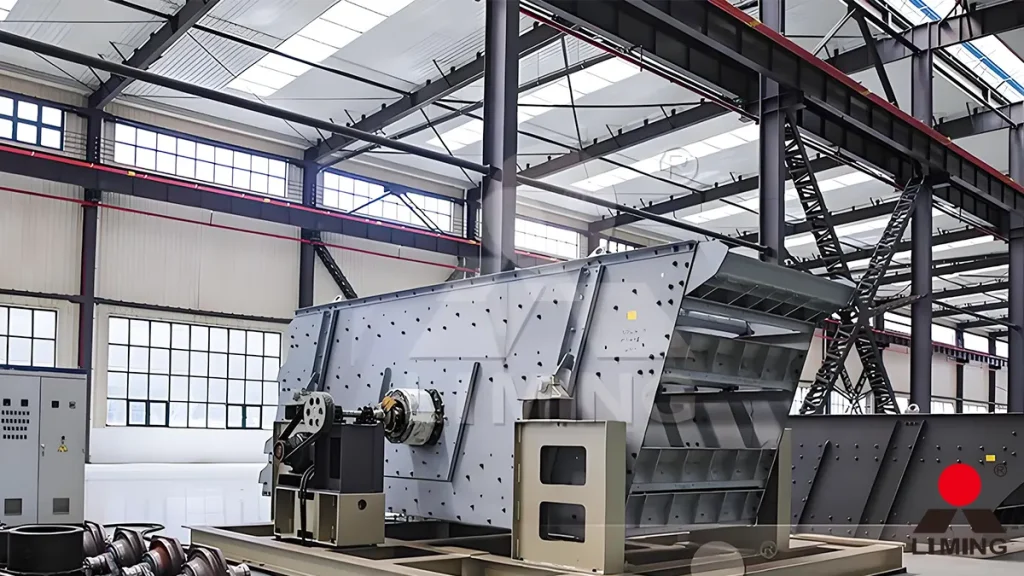
For high-capacity quarry sizing, plants rely on advanced inclined circular-motion screens like the S5X Series Vibrating Screen (such as the S5X2460-3). The S5X series utilizes a modular SV exciter that generates high dynamic G-forces, preventing near-size aggregate particles from pegging in the wire mesh. By utilizing multi-deck configurations, a single S5X machine can simultaneously output three to four distinct commercial aggregate sizes, maximizing the plant’s revenue streams.
2. Metallurgical Mining and Mineral Beneficiation
Metallic ores—such as iron, copper, and gold—are incredibly dense, abrasive, and often blasted into massive boulders. The screening equipment must withstand extreme kinetic shock loads. In this sector, heavy-duty scalping screens are installed immediately after primary jaw crushers.
For this brutal environment, mining engineers specify heavy-duty equipment like the YKN Series Vibrating Screen. Built with exceptional structural rigidity and fitted with thick rubber or steel punch-plate decks, the YKN screen absorbs the impact of large, abrasive metallic ores, ensuring that only the correct sized material progresses to the expensive cone crushers and ball mills.
3. Coal Preparation and Washing
The coal industry requires both dry sizing and wet processing. Raw coal must be screened to separate fine coal dust from larger lumps before washing. During the washing process, coal mixes with heavy media liquids to separate the combustible coal from worthless shale and rock.
Following the washing stage, the most critical application is dewatering. Clean coal must have its moisture content drastically reduced before transport to power plants to maintain a high thermal combustion value. This is achieved using linear motion screens equipped with fine slotted polyurethane panels, which shake the water out of the coal slurry.
4. Construction and Demolition (C&D) Waste Recycling
Recycling urban demolition rubble is highly complex because the feed material is a chaotic mixture of broken concrete, rebar, wood, drywall, and plastic. Standard wire mesh screens will blind and tear within hours.
In recycling applications, vibrating screens are used not just for sizing, but for material sorting. Specialized screens utilize flip-flow polyurethane mats or heavy-duty finger grizzly bars that flex violently under vibration. This aggressive motion shakes off sticky clay and separates lightweight trash (wood and plastic) from the heavy, recyclable concrete aggregate, allowing urban recycling centers to produce clean, reusable road base material.
Matching Machine Design to Material Characteristics
When I audit a processing plant experiencing high operating expenses or low product yield, the issue is almost always a mismatch between the screen’s mechanical design and the material’s physical properties.
| Material Characteristic | Screening Challenge | Engineering Solution & Equipment Type |
|---|---|---|
| Highly Abrasive (Quartz, Granite, Ores) | Rapid wear of standard wire mesh, high replacement costs. | Inclined screens (YKN Series) utilizing thick polyurethane or rubber modular screen panels to extend wear life. |
| High Moisture / Sticky Clay | Fines stick to the wire, blinding the apertures and stopping production. | High-frequency screens with flexible polyurethane mats or the addition of high-pressure water washing spray bars. |
| Wet Slurry / Muddy Suspensions | Need to separate solid particles from process water. | Linear motion dewatering screens (SL Series) operating at an upward incline to form a dry filter cake. |
For operations dealing specifically with wet processing and fine sand recovery, utilizing a dedicated linear motion unit like the SL Series Linear Vibrating Screen is non-negotiable. Dual counter-rotating vibrators create a linear upward thrust that forces water down through the deck while propelling the solid materials forward, resulting in a dry, stackable final product.
The Value of Turnkey Engineering Expertise
Understanding the vast industrial uses of vibrating screens proves that purchasing screening machinery is an engineering decision, not a simple commodity transaction. Buying a screen with the wrong stroke amplitude, improper deck inclination, or mismatched exciter frequency will severely bottleneck your entire production line and inflate your daily operating expenses.
At Liming Heavy Industry, we approach industrial screening through rigorous systems engineering. From analyzing your raw material’s moisture content and abrasion index in our laboratories, to engineering the exact screen trajectory and selecting the perfect deck media, we ensure total process synchronization. Whether you require a heavy-duty YKN scalper for a metallic ore mine or a precision S5X sizing screen for a commercial aggregate plant, our turnkey solutions maximize screening efficiency and guarantee long-term mechanical reliability.
Frequently Asked Questions (FAQ)
Below are technical answers to the most common process engineering questions regarding the application and optimization of industrial screening equipment.
1. What are the main industrial uses of vibrating screens?
Vibrating screens are primarily used for scalping (removing oversized or undersized rocks before crushing), sizing (classifying materials into precise commercial dimensions), and dewatering (separating liquids from solid particles in wet processing environments).
2. How does a circular motion inclined screen differ from a linear motion screen?
Circular motion screens operate on a downhill slope (15-25 degrees) using gravity for fast material travel, making them ideal for high-capacity dry sizing. Linear screens operate horizontally using twin motors to throw material forward, offering longer retention times perfect for fine sizing and wet dewatering.
3. What is screen blinding and how do industrial screens prevent it?
Blinding occurs when moisture causes fine dust to cake over the screen holes, blocking material flow. Industrial screens prevent this by utilizing high-frequency exciters, flexible polyurethane screen panels that vibrate to shake off mud, or by adding wet-washing spray bars.
4. Why is the S5X Vibrating Screen recommended for aggregate production?
The S5X series utilizes advanced SV modular exciters that generate extremely high dynamic forces. This prevents near-size crushed stone from pegging in the screen deck, ensuring exact dimensional accuracy for high-spec concrete and asphalt aggregates.
5. Can vibrating screens be used to process highly abrasive metallic ores?
Yes. Heavy-duty screens like the YKN series are engineered with heavily reinforced steel side plates and equipped with thick rubber or punch-plate steel decks specifically designed to absorb the severe impact of heavy, abrasive mining ores.
6. What role do vibrating screens play in coal preparation plants?
In coal plants, screens separate fine coal dust from larger lumps prior to washing, and more importantly, they are used as dewatering screens post-washing to remove moisture from the clean coal, which is critical for maintaining its thermal combustion value.
7. How do I choose between woven wire mesh and polyurethane screen panels?
Woven wire mesh provides maximum open area and throughput for dry, non-abrasive materials. Polyurethane panels are more expensive initially but outlast wire mesh by up to six times in wet, highly abrasive, or sticky material applications, lowering long-term replacement costs.
8. What is the purpose of a linear dewatering screen?
A dewatering screen (like the SL Series) is designed to recover fine solid particles from a liquid slurry. By vibrating at high G-forces on a slight upward incline, it forces water down through the mesh while discharging a dry, stackable solid material.
9. Why is scalping important before a secondary cone crusher?
Scalping removes fine dirt and already-to-size rocks from the feed before they enter the cone crusher. This prevents the crusher chamber from packing, reduces the risk of main shaft damage, and saves a massive amount of electrical power.
10. Does Liming Heavy Industry provide custom screening solutions?
Yes. Liming Heavy Industry provides comprehensive engineering services, from material laboratory testing to the custom manufacturing of S5X, YKN, and SL series screens, ensuring the machinery perfectly matches your specific industrial application and capacity requirements.
Conclusion
The industrial uses of vibrating screens extend far beyond basic rock sorting. They are highly complex electromechanical systems that dictate the quality, efficiency, and profitability of mining, aggregate, coal, and recycling operations worldwide. Understanding the nuances of screening kinematics, deck media, and material behavior is the only way to design a truly optimized processing plant.
By implementing purpose-built machinery tailored to your exact application, you can eliminate downstream bottlenecks, drastically lower maintenance costs, and ensure your final product meets the strictest industry specifications. Contact the process engineering team at Liming Heavy Industry today to analyze your material flow and upgrade your facility with our advanced screening technology.