

Architecting an extraction node in the Philippine archipelago is an unforgiving battle against tropical hydrology and extreme silica abrasion. River pebbles extracted from Mindanao or Visayas riverbeds consist of over 80% silica and routinely exceed 200MPa in compressive strength. Furthermore, they are dredged alongside dense, sticky clay. Attempting to force this material through a generic, flat-land aggregate flowchart guarantees immediate cavity blinding and catastrophic wear-part vaporization. To secure the mass balance, the architecture must mandate a highly specialized 3-stage closed-circuit hierarchy: active mud-bypassing at the primary intake, high-pressure lamination for secondary abrasive survival, and strict kinetic rock-on-rock shaping to cure the resulting aggregate geometry.
Monsoon Mud and Grizzly Bypass Integration
You cannot apply 160kW of compressive leverage to a solid block of mud.
During the Philippine monsoon season, river stone extraction brings massive amounts of sticky clay. Novice designers treat the primary jaw crusher as a universal funnel, feeding wet, mud-caked boulders directly into the V-cavity. This is an architectural failure. The clay packs solid between the fixed and moving jaw plates. The material cannot compress, instantly blinding the cavity.
The 160kW main motor spikes its amperage and suffers a violent thermal stall.
The entire plant dies within the first hour of a heavy rain shift. The architecture must integrate an F5X vibrating grizzly feeder. As the excavator dumps the raw feed, the stepped grizzly bars physically separate the -100mm wet clay and fine dirt, bypassing the jaw cavity entirely and routing the mud directly to a side discharge belt. Only clean, hard boulders enter the primary C6X jaw, ensuring the motor maintains its rotational inertia without suffering a thermal overload.
High-Silica Friction and Secondary Lamination
Once the primary jaw reduces the raw boulders to a 150mm profile, the most critical architectural decision occurs. Deploying a secondary impact crusher on Philippine river stone is an exercise in extreme capital misallocation. The abrasive friction of 80% silica will literally vaporize high-chrome blow bars in under 48 hours, causing a catastrophic spike in your expenditure per shift.
To survive this geology, the secondary stage must rely on continuous annular compression.
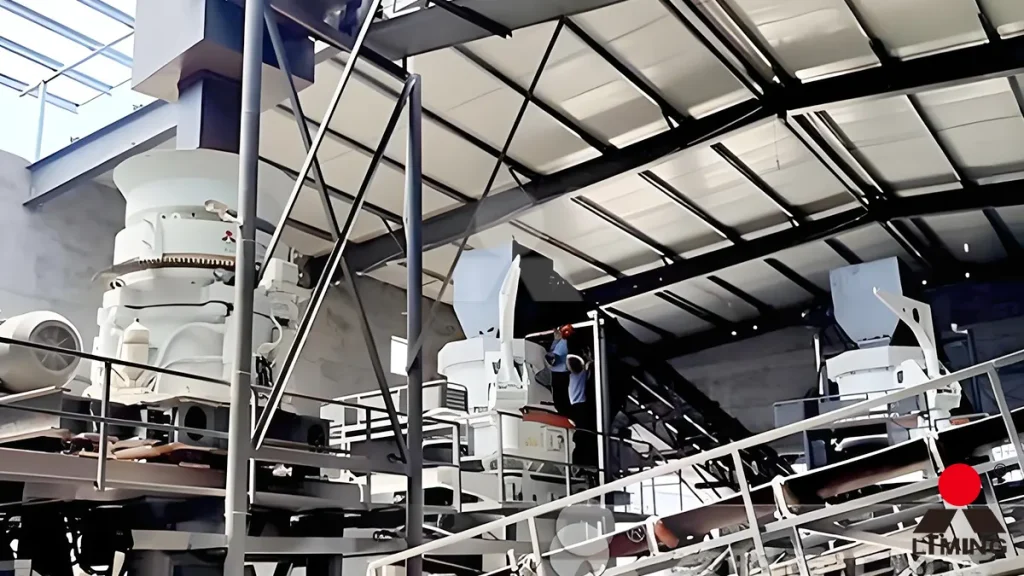
An HPT multi-cylinder hydraulic cone crusher is the absolute mandate. It utilizes high-pressure lamination crushing. By enforcing a strict choke-fed cavity, the cone forces the abrasive river pebbles to grind against each other (rock-on-rock friction) within a tight 15mm Closed Side Setting (CSS). The pebbles destroy themselves, thereby protecting the machine’s manganese mantle from rapid degradation and stabilizing the circuit amortization cycle.
A strict 3-stage hierarchy is required to balance abrasive survival with geometric compliance in the Philippines.
| Process Stage | Recommended Equipment | Capacity (tons per hour) | Kinetic Function |
|---|---|---|---|
| Primary Mud Bypass & Extraction | F5X Feeder + C6X110 Jaw | 160-550 | Clay separation & gross reduction |
| Secondary Abrasive Survival | HPT300 Cone Crusher | 110-440 | Lamination Crushing (Flaky Yield) |
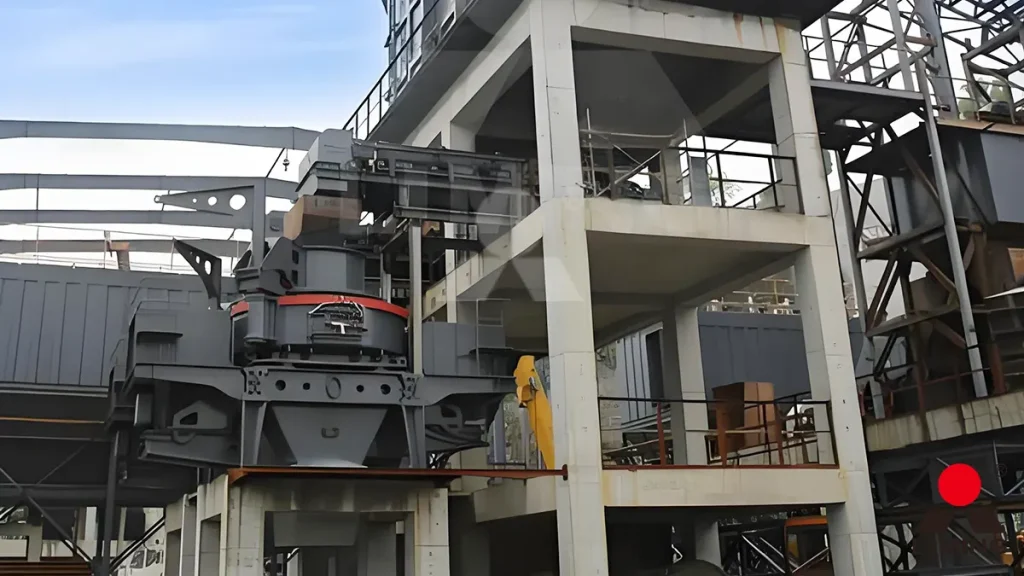
| Tertiary Geometric Shaping | VSI6X1040 Sand Maker | 264-515 | Rock-on-Rock Kinetic Collision |
Analyze the 250kW drive power of the HPT300 cone. You need massive electrical torque to force a heavy forged eccentric shaft to break 200MPa silica pebble without stalling. Underpowering this node destroys the mass flow.
Tertiary Shaping and Closed-Circuit Geometry
While the HPT cone survives the silica, compressive crushing of naturally rounded river pebbles inherently yields a 15-20% flakiness index. The rock shears into sharp, flat slivers. If you attempt to supply this raw cone output to a structural concrete plant in Manila, it will fail commercial shear-stress tests instantly.
Field Note: I audited a suspended operation in Luzon where the contractor omitted the VSI to save initial capital. The resulting aggregate required 18% more cement paste to fill the voids created by the flaky shape. The ready-mix plant rejected the entire 5,000-ton stockpile.
To cure this geometric flaw, a tertiary VSI6X sand maker must be deployed. By forcing the flaky pebbles into a high-speed “rock-on-rock” kinetic collision within its deep-cavity rotor, the VSI physically chips off the sharp edges, reducing the final flakiness index to a strict <8%.
Furthermore, an open-circuit river stone plant guarantees a mass balance deficit. The flowchart must mandate an S5X closed-circuit screening matrix. Any +40mm oversized pebbles that fail to pass the screen deck are captured and continuously recirculated back to the secondary cone, ensuring a strict zero-waste extraction flow.
Philippine River Stone Circuit: Kinetic Thresholds
- Mud Bypass Capacity: F5X grizzly actively ejecting >20% clay volume
- System Mass Flow: Sustained 280-310 tph across closed-circuit nodes
- Cone Discharge Profile: Compressed to 0-30mm (Secondary Buffer)
- VSI Feed Restriction: Absolute maximum 40mm rock acceptance
- Screening Integration: S5X closed-circuit looping for +40mm rejects
Enforce Geometric and Kinetic Discipline
Architecting an extraction node in the Philippines requires total alignment with tropical hydrology and high-silica abrasion. If you attempt to feed monsoon mud directly into your primary jaw without an F5X bypass, or if you deploy an impactor into the secondary position next month, your wear-part costs will explode and your motor will violently stall. The architecture dictates a C6X primary jaw with grizzly mud-bypass, an HPT secondary cone for abrasive survival, and a tertiary VSI6X sand maker bound by an S5X closed-circuit loop. Respect the physics of silica abrasion and lock in your mass balance.
Audit your feed moisture and enforce the 3-stage hierarchy immediately.