

Based on recent site audits across the Northern Cape, the biggest threat to capital payback velocity isn’t the upfront cost of the equipment, but the hidden wear caused by pairing lightweight frames with unyielding geology. You feel the problem immediately through the soles of your steel-toed boots on the operator platform; a high-frequency vibration indicates the kinetic energy is bypassing the crushing cavity and tearing directly into the structural welds.
Surviving 200MPa Quartzite with Mobile Chassis Configurations
A generic steel frame will shear its primary struts under the reactive force of high-silica rock.
Operators frequently ignore the mechanical physics of mobile extraction. When a jaw crusher engages against 200MPa platinum ore or quartzite, the compressive force requires an immediate anchor. If the plant mass is compromised to make shipping cheaper, that violent energy transfers into the hydraulic cylinders and eccentric shafts. The dull thud of damp material quickly changes to a sharp metallic ping when processing these abrasive fines. The main shaft tolerances distort.
Stop trusting lightweight spec sheets. A heavily reinforced chassis design isolates destructive vibration from your primary drive motors. We see continuous shifts where operators flood the feed hopper during dry seasons, causing severe dust ingress. A properly engineered NK Series chassis integrates stress-relieved steel plates and sealed toggle plates to absorb this chaotic load distribution without fracturing.
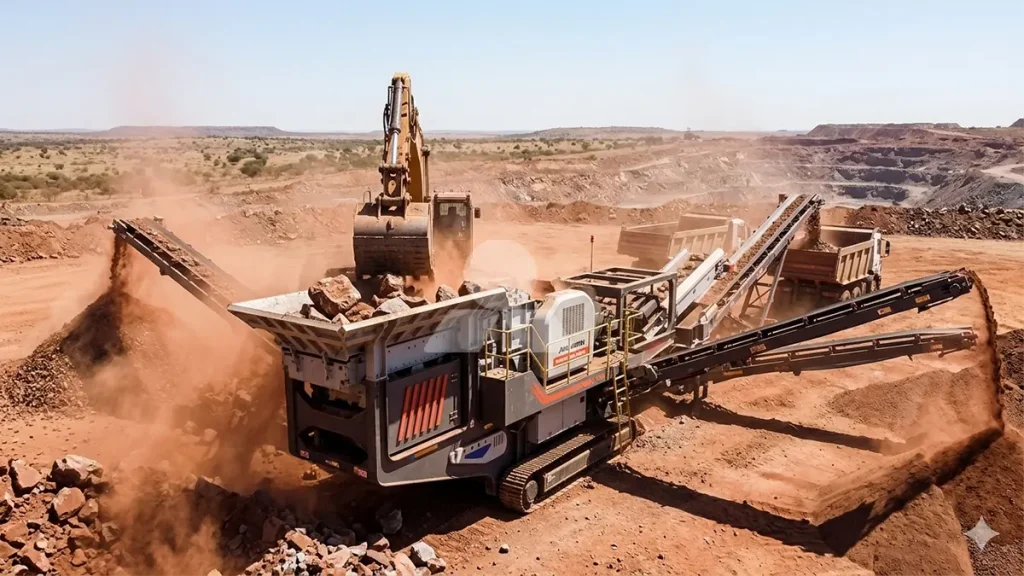
The Engineering Blueprint: 250tph Isolated Drive Architecture
Relying on standard municipal power for heavy kinetic equipment in load-shedding zones guarantees motor burnouts.
To handle the abrasive nature of regional gold tailings at 250 tons per hour, we have engineered a highly specific circuit. This matrix entirely circumvents grid dependency by utilizing dual-power capabilities, locking in your expenditure per shift regardless of infrastructure failures.
| Process Stage | Recommended Model | Capacity (tons per hour) | Max Feed (millimeters) | Power (kilowatts) | Mounting Type |
|---|---|---|---|---|---|
| Primary Stage | NK73 Jaw Plant | 250 | 600 | 110 | Pneumatic/Tire-mounted |
| Secondary Stage | NK300S Cone Plant | 250 | 150 | 220 | Pneumatic/Tire-mounted |
| Screening Stage | NK200 Screen | 300 | 150 | 30 | Pneumatic/Tire-mounted |
Combating Voltage Drops and Lubrication Seizure
Voltage drops cause immediate thermal spikes in primary cone bearings, turning routine operations into scrap metal.
When the local grid cuts out unexpectedly, heavy kinetic rotors decelerate unevenly under massive friction loads. You can smell the sharp scent of scorched grease when a 220-kilowatt motor pulls excessive amperage to compensate for a dropping power line. The physics dictate that under-lubricated manganese liners will warp if the cooling system loses pressure during a brownout.
Do not skip the onboard diesel gensets. Implementing isolated micro-grids on the NK300S cone unit ensures the hydraulic tramp release and lubrication pumps maintain exact pressure. The system requires exactly 0.15 MPa of oil pressure to keep the main shaft afloat. Every minute your plant runs below this threshold, you accelerate the asset amortization cycle by months.
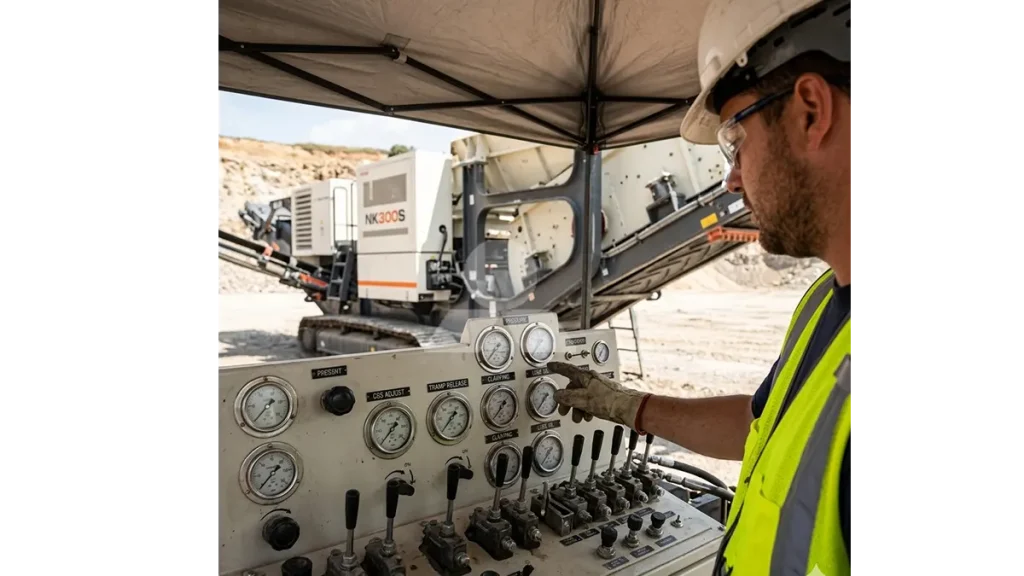
250tph Quartzite Circuit: Kinetic Load & Vibration Thresholds
- Target Capacity: 250 tons per hour
- Discharge Tolerance: 15 millimeters
- Max Feed Hardness: 200 MPa
- Peak Power Draw: 220 kilowatts (Secondary Stage)
- Asset Amortization Cycle: 16-22 Months (Optimal)
Technical Index: LH-MODULAR-April/2026-Ref-#48219
Chief Mechanic’s Log: Addressing Hydraulic Failures in Mobile High-Load Operations
- Why does the cone tramp release trigger randomly during cold morning startups?
- Observing the ambient temperature drops in high-altitude mining zones, we see hydraulic oil viscosity thicken dramatically. Before the 220-kilowatt heating elements bring the fluid to operational temperature, pressure sensors misread the dense fluid as uncrushable tramp iron, triggering a false release at the 15-millimeter discharge setting.
- How does local load shedding directly damage the primary jaw’s eccentric shaft?
- Historically, we track an exact correlation between sudden voltage loss and microscopic shaft fractures. When a 110-kilowatt motor cuts out instantly while the jaw is fully loaded with 200 MPa rock, the kinetic shockwave travels backward through the swing jaw directly into the unmoving eccentric shaft, causing severe metal fatigue.
- Is it fiscally viable to operate without the dual-power generator configuration?
- A cheap initial setup guarantees an expensive mechanical failure. Operating purely on volatile grids forces the equipment into asynchronous running states; replacing one seized bearing fit due to sudden cooling pressure loss will cost more than the onboard diesel genset.
- What causes the rapid degradation of manganese wear parts in regional extraction?
- Analyzing the core chemistry of local quartzite reveals an exceptionally high concentration of abrasive silica. When this material is processed at 250 tons per hour without keeping the crushing cavity choke-fed, the rock strikes the manganese concave directly instead of crushing against other rock, destroying the liner profile.
Arresting Frame Fatigue in High-Capacity Platinum Circuits
The physics do not care about your tight production schedule. If you push a standard commercial chassis against 200 MPa quartzite without isolated dual-power capabilities, the continuous kinetic shock and sudden voltage drops will cause complete frame fracture and bearing seizure within the next month of operation. Audit your structural tolerances and secure your mechanical autonomy before you lose your primary crushing stage entirely.
Stop Guessing on Rotor Wear Cycles
“Evaluate your structural fatigue risk before the ore evaluates it for you.” — From the Desk of your Site Lead